
Blog
What a Legal Assistant Really Costs a California Workers' Compensation Firm in 2027, and Which Work to Hand Off First

Whatever salary you put on the requisition, the seat costs about half as much again. Federal data puts wages at 68.5 percent of what employers actually spend on a full-time private-sector worker. Before approving one for 2027, it is worth separating the work that needs a person at a desk from the work that only needs doing.
Budget season turns an open requisition into a number, and the number on the requisition is almost never the number the firm pays.
The salary line is about two thirds of the cost
The Bureau of Labor Statistics measures what employers actually spend, not what workers take home. In its Employer Costs for Employee Compensation release for June 2026, total compensation for full-time private industry workers averaged $54.00 per hour worked: $36.97 in wages and salaries, and $17.03 in benefits.
Wages were 68.5 percent of the total. Benefits were 31.5 percent.
That ratio is the useful part, because it works on whatever number you were about to put on the requisition. Divide the salary by 0.685 and you have the fully loaded figure.
Treat these as estimates rather than quotes. The ratio is a national average across all private industry, and the two sides are not measured identically, since the ECEC counts paid leave as a benefit and reports per hour worked. The figures also exclude recruitment, equipment, a software seat, workspace, management time, and the months before a new hire is productive on your files. Every one of those pushes the real number up rather than down.
Where the salary line should start
The Bureau puts the national median for paralegals and legal assistants at $62,890 for May 2025. Fully loaded, that is roughly $92,000.
California runs well above it. The Occupational Employment and Wage Statistics release for the same period reports a California median of $77,390 across 47,130 jobs, the largest count of any state, with the 75th percentile at $98,430. Run those through the ratio and the seat costs roughly $113,000 and $144,000 respectively.
An experienced workers' compensation legal assistant who already knows EAMS, subpoena practice and your case management system is not a median hire. If budgets are being set from a state median, the requisition is probably underfunded before anyone interviews.
The question underneath the requisition
Most firms do not open a requisition because they need a person. They open one because a pile of work has no owner. Those are different problems, and only one of them is solved by hiring.
A legal assistant seat usually bundles two kinds of work. There is work that needs judgment, context and presence: fielding a client call, knowing which file is about to go sideways, catching the thing nobody flagged. And there is work that needs capacity and follow-through: sending the subpoena, chasing the facility, filing the document, confirming it processed, transcribing the dictation.
The second kind is where the hours go, and it is the kind that does not need to sit in your office.
Which work to hand off first
The industry term for this is legal process outsourcing, or LPO, and it covers a wider range than most people assume. At one end sit substantive tasks like document review and legal research. At the other sit the routine legal support services a workers' compensation file generates constantly: transcription, filing, records work, billing support.
Three categories of legal support transfer cleanly, and they transfer for the same reason: each is defined by a process rather than by familiarity with your firm.
Records retrieval. Drafting the subpoena or authorization, serving it, chasing the facility, and checking that what arrives is complete. It is the highest-volume item on most workers' compensation files, and as we set out in why records requests stall, most of what looks like a provider ignoring you is a defective request or one nobody owns.
EAMS filing and service. The filing itself, the proof of service, confirming the document processed rather than merely submitted, and the physical service copies where the matter requires them. The rules here are unforgiving, as the proof of service requirements show, and deadline exposure plus no clear owner is a bad combination.
Dictation and transcription. Attorney recordings turned into clean, formatted documents. Pure throughput, and the easiest of the three to measure before and after.
Each is a defined output with a definable standard. None requires sitting in your office to do well.
What a hire still does better
It is worth being honest about where this argument stops.
An outside provider does not absorb client relationships. The call from an adjuster who wants a judgment call, not a status update, needs someone inside your firm who knows the file and the client.
It does not replace institutional memory. Knowing that a particular judge sets things a certain way, or that one carrier always asks for the same report, is not a process and cannot be handed over with a task list.
And it does not supervise itself. The American Bar Association addressed this in Formal Opinion 08-451, which concluded that outsourcing legal and nonlegal support services is permissible provided the lawyer remains competent, adequately supervises the work, protects client confidences, checks for conflicts and bills appropriately. Supervision is not a nice-to-have in that framing. It is the condition the arrangement rests on. Firms that hand off without assigning anyone to review the output usually conclude outsourcing does not work, when what did not work was the handoff.
The case for outsourcing legal support in workers' compensation is not that it does everything a hire does. It is that legal process outsourcing handles the process-bound part reliably, which frees the seat you do fund to do the part only a person inside the firm can do.
Before the 2027 requisition is approved
Take the salary you had in mind, divide it by 0.685, and look at what comes out. Then take the job description and split it in two: the work that needs someone who knows your files, your clients and your judges, and the work that needs a defined output delivered on time.
If the second list is longer than the first, the requisition is answering the wrong question.
EWORD Solutions provides records retrieval, EAMS filing and service, and dictation and transcription for California workers' compensation firms, with services taken individually or together. What the records establish, and what to do about them, remain determinations for counsel.
Talk to EWORD about which work to hand off first
Whatever salary you put on the requisition, the seat costs about half as much again. Federal data puts wages at 68.5 percent of what employers actually spend on a full-time private-sector worker. Before approving one for 2027, it is worth separating the work that needs a person at a desk from the work that only needs doing.

Most stalled records requests are not being ignored. They are defective, unassigned, or sitting in a queue nobody is working. Knowing which of the three you have is what gets the file moving, and a sloppy request costs more than time.
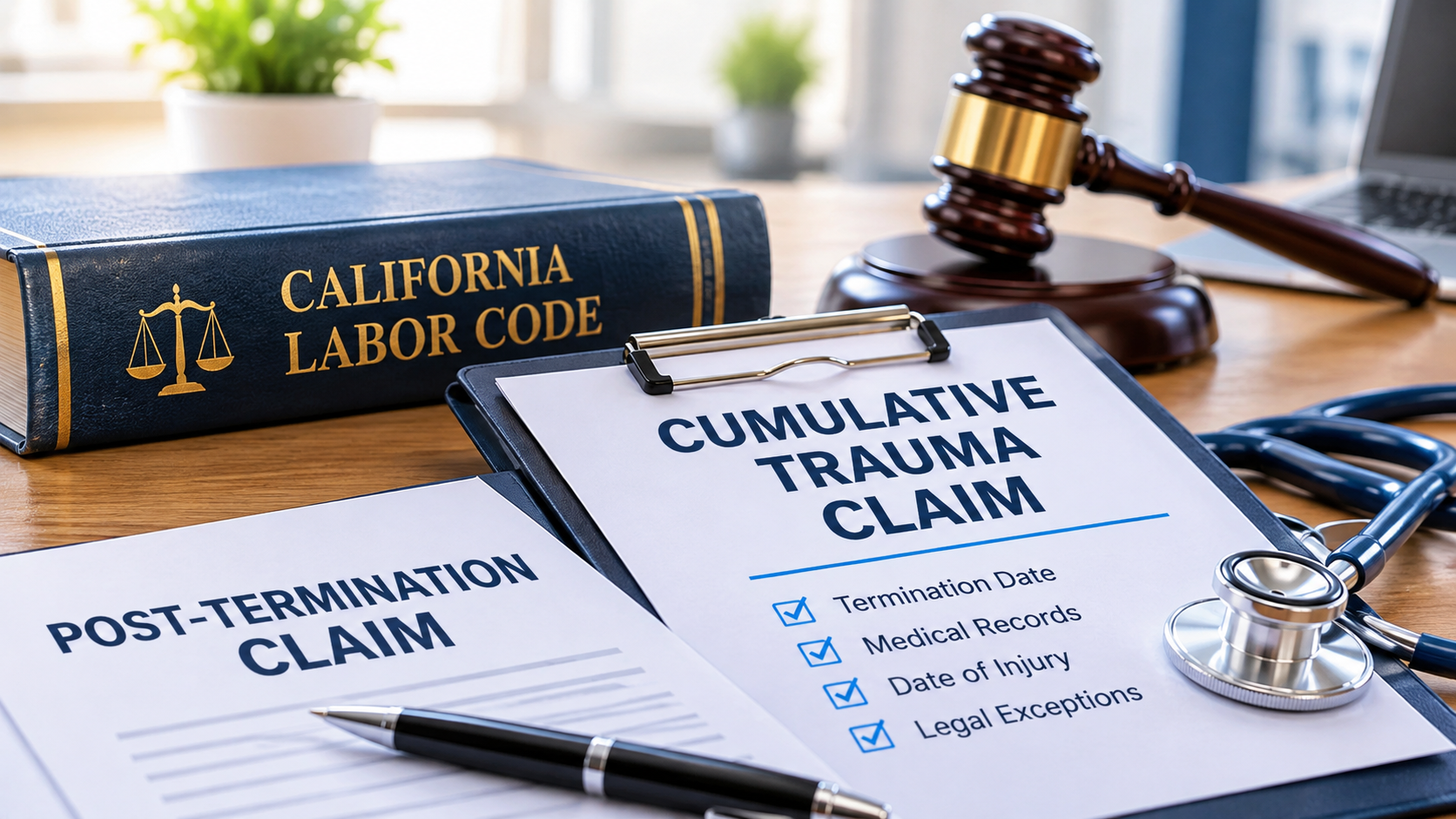
Post-termination cumulative trauma claims in California are a growing share of the caseload. In its study of accident years 2022 through 2024, the WCIRB found 58% of CT claims were filed after employment ended, up from 44% a decade earlier, and that nearly all were litigated. For defense firms, that makes the dates and documents in the file especially important.